
- News
- City News
- delhi News
- The year fashion and the sarkar stitched a pattern together
Trending
This story is from December 31, 2017
The year fashion and the sarkar stitched a pattern together
From staying at an arm's length from each other to working together to promote indigenous textiles as an industry with global potential - how the government became fashion friendly in 2017.
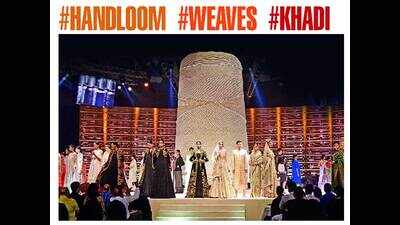
A fashion show by several major designers, titled Symphony of Weaves, was part of the mega textile fair Textiles India 2017 in Gandhinagar in July (Photo: Mayur Bhatt)

Similarly, until recently, khadi and handlooms couldn’t be imagined out of government emporiums, and textiles, handlooms and traditional weaving were very much treated as an ‘industry’. But they’ve come out of emporiums and trade fairs and on to the ramp, as the government spearheads a cultural appropriation of fashion. Fashion is no longer frivolous, but a serious partner in promoting traditional crafts.
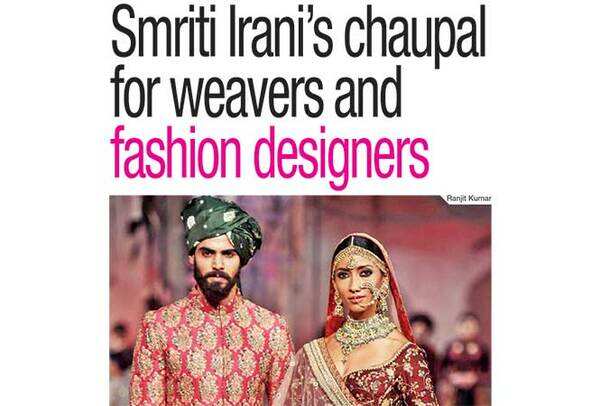
The Development Commissioner (Handlooms) organized a 'Designer Chaupal' in Delhi in August, which was attended by officials from the Textiles Ministry, designers and weavers
This mingling of the sarkari and fashion world was set in motion after Textiles Minister Smriti Irani's #IWearHandloom Twitter campaign in 2016, which suddenly made the traditional fabric cool. In 2017, Irani’s #CottonIsCool campaign had ministers and bureaucrats - who would earlier be reluctant to talk about what they wear - posting their photos wearing cotton. And where it used to be a rarity to spot a minister at a fashion show, the curtain raiser of Textiles India 2017 at Delhi’s Crafts Museum had Smriti Irani, Ajay Tamta, MoS for Textiles, and Rashmi Verma, Secretary, Ministry of Textiles, sharing the front row with designers like Sabyasachi Mukherji, Tarun Tahiliani and Manish Arora. The event wasn't treated as just another 'fashion show', but an event to promote handloom. It was followed by Textiles India 2017 in Gandhinagar, a mega B2B textiles and handicrafts event, which also saw participation from designers and helped them connect with weavers. It transformed the way fashion was perceived by the administration and gave it a serious makeover, and 13 designers, including Rajesh Pratap Singh, Abraham and Thakore, Samant Chauhan and Rahul Mishra, were assigned 'handloom clusters' to train weavers in different regions under the government’s Cluster Initiative.
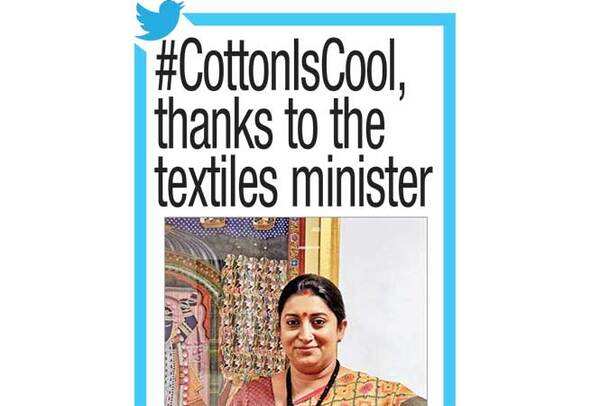
After last year’s #IWearHandloom, this year, Smriti Irani decided to jazz up the cotton fabric with #CottonIsCool, and plenty of netas and celebrities posted their pictures in cotton apparel using the hashtag
What changed in 2017
Forget sharing a picture on social media, even attending a fashion activity used to be largely a no-no for politicians. So when politicians started attending fashion shows, and weren’t shying away from talking about which designer outfit they were wearing at events, it wasn’t just encouraging for designers, but also led to foreign diplomats employing ‘fashion diplomacy’ to promote Indian handloom. MaryKay Carlson, the Charge d’Affaires of the US Embassy, ran a #SareeSearch on Twitter, asking followers which handloom sari she should wear on August 15. "The ministry’s support to fashion has encouraged foreign diplomats to actively participate in fashion events. Fashion collaborations with different nations have remained a highlight of 2017. The Japanese ambassador and his wife were a part of important events, like the fashion show at the Crafts Museum where Smriti Irani participated. The Italian ambassador has offered his residence to host a fashion show and to take a few designers to Italy. Indonesia has also made the same move," says Fashion Design Council of India (FDCI) president Sunil Sethi.
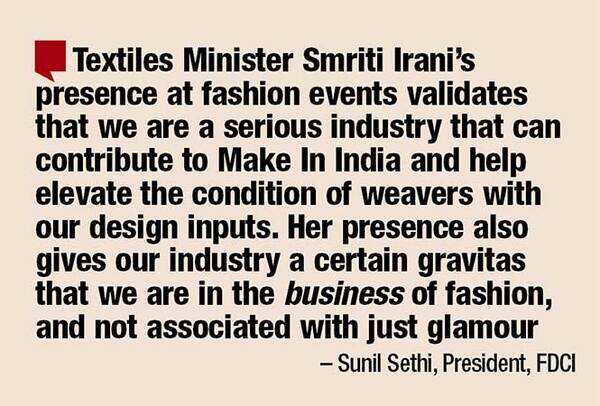
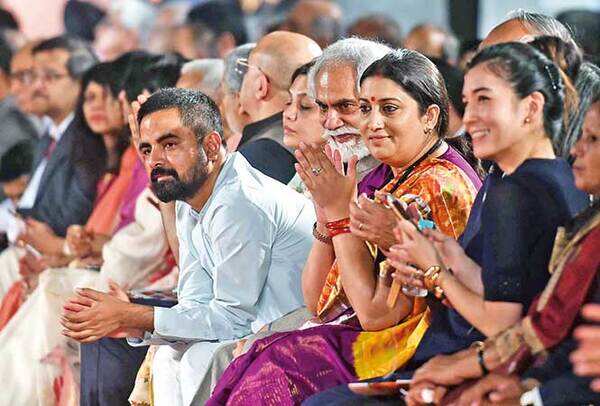
Sabyasachi Mukherji, Sunil Sethi and Smriti Irani at the curtain raiser show for Textiles India 2017 at Crafts Museum in Delhi (BCCL/ Ranjit Kumar)
Sethi adds that in 2017, state governments took the initiative to promote textiles through fashion. "State governments today are feeling the need to promote fashion and textile as part of their tourism campaigns. In 2017, Assam, Jharkhand and Chhattisgarh took major steps in promoting textiles in collaboration with designers, and other states like Maharashtra are inviting designers to design products with their indigenous textiles. We were recently contacted by the Odisha government to do one such show," says Sethi.
Ritu Beri, who has been the advisor for the Khadi and Village Industries Commission (KVIC) and has designed collections promoting khadi, adds, "So far, fashion was far away from the government’s trajectory. But now, the ministry is actively engaged in promoting fashion in the country."
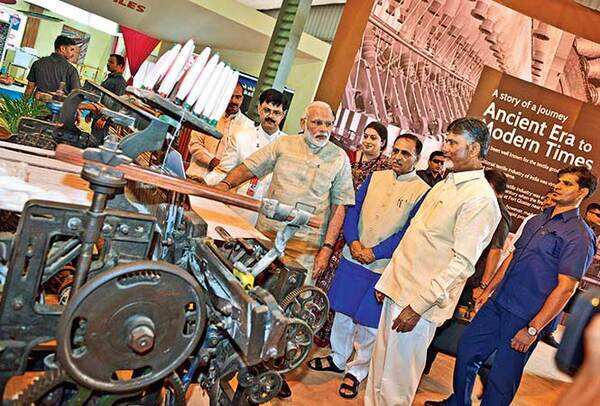
PM Narendra Modi at an exhibition at Textile India 2017 and (below) with FDCI President Sunil Sethi at the event
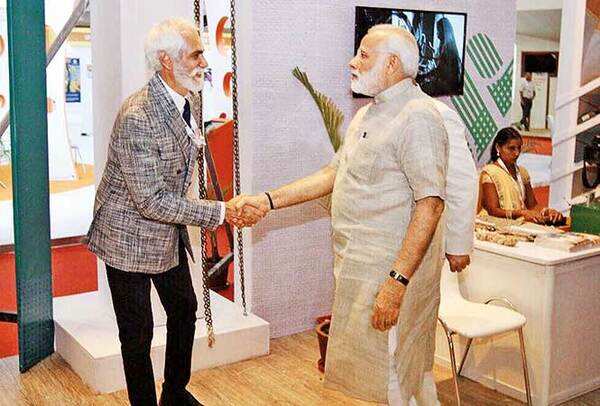
PM Modi with FDCI President Sunil Sethi at the event
'Government and designers are now a team'
Fashion’s own attempts in promoting handloom through shows dedicated to Banarasi or khadi did indicate a shift of focus in 2015, when 25 designers came together to present 'Crafts of India' with khadi as the focus of the show. In the fashion week in Delhi the same year, there were two dedicated slots for showcasing Banarasi weaves. The government reached out to fashion for promoting handloom in 2016 during the Make In India week in Mumbai, where a fashion show by the Ministry of Commerce and Industry, the Department of Industrial Policy and Promotion, and the FDCI played the precursor to the government-fashion collaboration which took shape in 2017.
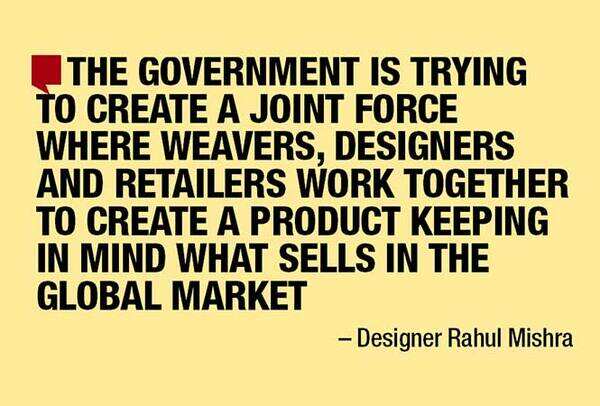
"The government is trying to create a joint force where weavers, designers and retailers work together to create a product keeping in mind what sells in the global market. In that sense, Textiles India 2017 was a marketing feedback center for all of us. Also, when the government gets involved, the access of and dialogue with people involved in the retail chain is easier,” says designer Rahul Mishra, who has used Chanderi and Maheshwari silk in his collections for years. He adds, “Earlier for the government, handloom was a small segment in revenue terms, but for this government, handloom is a sector with great potential in terms of employment. To give it a boost, the ministry has roped in designers who can enable weavers to create designs for the global market."
Ritu Kumar, who has been working with the handloom sector for many years, says the most important change that came in 2017 is that "there is a feeling of working as a team, where a minister like Mrs Irani is encouraging the interaction between weavers and designers, and all are working towards a common goal of promoting handwoven fabric." The designer says that earlier, those designing with handloom were working independently, while for the government, fashion and textile promotion were two different things. "The two have merged now. This government understands the importance of interaction between the weaver and designer community. There was a time when promotion of handloom and textiles had taken a back seat, but now, the government has taken initiatives as per the requirements of the handloom sector today," adds Kumar.
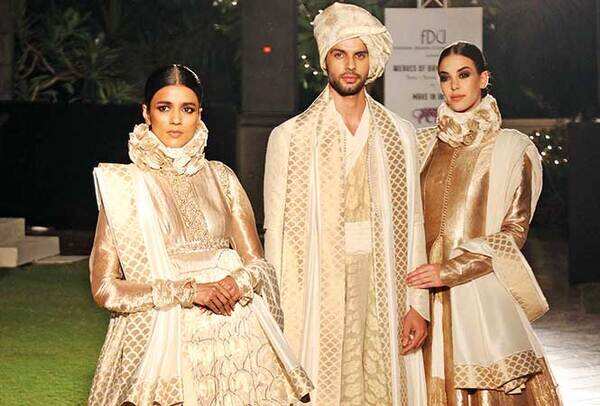
#Flashback: The government’s first fashion-friendly activity was in 2016 at the Make In India Week in Mumbai. A fashion show was an important part of the event, and was the precursor to the government’s focused push to promote handlooms in 2017
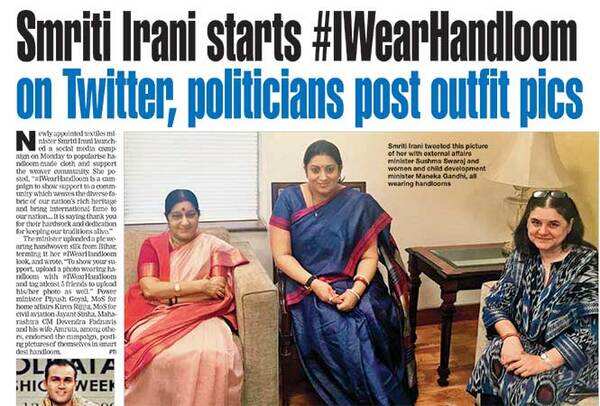
In 2016, Smriti Irani brought handloom and khadi out of dusty government emporiums and into Twitterverse by starting the hugely successful 'I Wear Handloom' hashtag. She tweeted a pic of herself with Sushma Swaraj and Maneka Gandhi - all sporting handloom – and wearing the traditional fabric was instantly cool. Politicians, celebrities and sports stars jumped in with their pics sporting the fabric
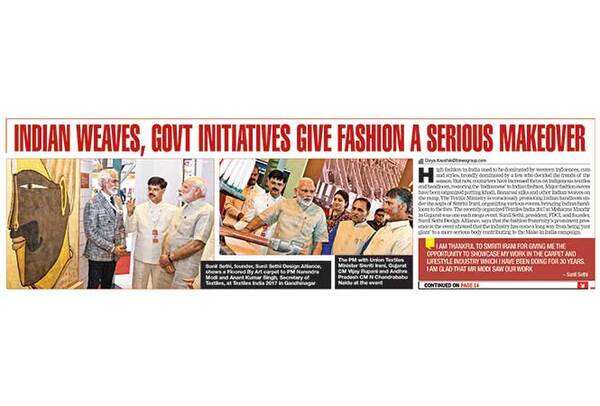
Fashion shed its glam-only image and was recognised as a serious industry contributing to the promotion of handlooms at Textiles India 2017
After Banarasi and Khadi, focus on other indigenous textiles
After sustained efforts for two years through fashion shows to revive Banarasi and khadi, the focus this year shifted to other indigenous textiles, and the Cluster Initiative was a step towards promoting crafts and weavers of different regions. The initiative formed a part of the Textile Ministry’s handloom schemes for a few years, but it was in 2017 that an MoU was signed between the ministry and designers on National Handloom Day. While Rajesh Pratap Singh is working in Varanasi, David Abraham and Rakesh Thakore have been working in Andhra Pradesh, Samant Chauhan, who has been working with Bhagalpuri silk for years, is working in the Bhagalpur cluster, and Rahul Mishra in Assam. "The best part about the Cluster Initiative is that it helps weavers understand the requirements of design innovation. Each designer is working in the area which has been his/her specialization for years," concludes Rahul.
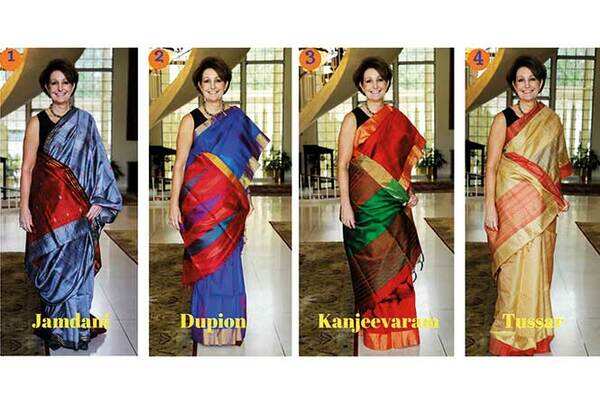
A few days before August 15, MaryKay Carlson, Charge d'Affaires of the US Embassy, ran a Twitter poll to help her decide which sari out of five different handloom weaves she should wear for Independence Day. She went with the voters' choice and wore a maroon and green kanjeevaram
End of Article
FOLLOW US ON SOCIAL MEDIA





Hot Picks
TOP TRENDING
Popular Categories
Hot on the Web
Top Trends
Israel Hezbollah WarTirupati Laddu Case HearingKolkata Doctor Rape HearingIND vs BAN Live ScoreRohit SharmaIftikhar AhmedMohammed SirajUGC NET Result 2024TS DSC Results 2024Women T20 World Cup Points TableWomen T20 World Cup ScheduleShane McMahon Net WorthHezbollah ChiefEarth Mini MoonDiddyTop Management Colleges of IndiaLive Cricket Score
Trending Topics
Devara CollectionMithun ChakrabortyKangana RanautPark Ji AhStree 2 OTT ReleaseAnant AmbaniDevara CollectionOTT Release MovieMasala OmeletteEmergencyDevaraTaaza Khabar 2 Twitter ReviewDevara Movie ReviewHealthy RaitasSwatantrya Veer SavarkarColdplay India tour 2025Smartphone DealsApple Macbook Air M1Amazon SaleWordle Answer
Living and entertainment
Latest News
The Power of Color: Zodiac Signs and Their Energetic Hues'For the next 10 years, we've got players who will make our country proud' says VVS Laxman on bench strengthBarbra Streisand pays tribute to late 'A Star Is Born' co-star Kris Kristofferson: 'He was something special'Sasikumar and Simran join hands for a feel-good, city-based entertainerCovid lockdown on earth led to dip in Moon's temperature: StudyQueen Camilla does not want King Charles to meet Prince Harry because...From A.R. Rahman to Satyajit Ray: Indian Oscar winners who made historyWatch: Jasprit Bumrah’s lethal inswinger shatters Mushfiqur Rahim’s off stumpManipur CM Biren accuses Kuki militants of abducting 2 Manipuri youthsPaul Heyman opens up on declining TNA offer after leaving WWEFun-filled inside pictures from Inaaya Naumi’s 7th birthday party with Kareena Kapoor, Saif Ali Khan, Taimur, Jeh, Soha, Kunal Kemmu and more family membersHeader: Kolkata metro conducts public awareness campaign at Dum Dum metro stationBCCI's Centre of Excellence opens up new possibilitiesBigg Boss 18 Promo: Salman Khan reveals the theme of the season by predicting the contestants' future in the houseIndia’s choking beyond Delhi: Byrnihat shows we have a big unnoticed pollution problemHow NFL Players Juggle Family Life and a Demanding CareerThe Role of Family Support in the Success of NFL Players"I feel terrible for Rashee": Chiefs Coach Andy Reid offers insight into Rashee Rice’s knee status post-win
Copyright © 2024 Bennett, Coleman & Co. Ltd. All rights reserved. For reprint rights: Times Syndication Service